
2026-10-29 · Clay Burn
Preparing Your Heat Pump For Summer In Hempstead County
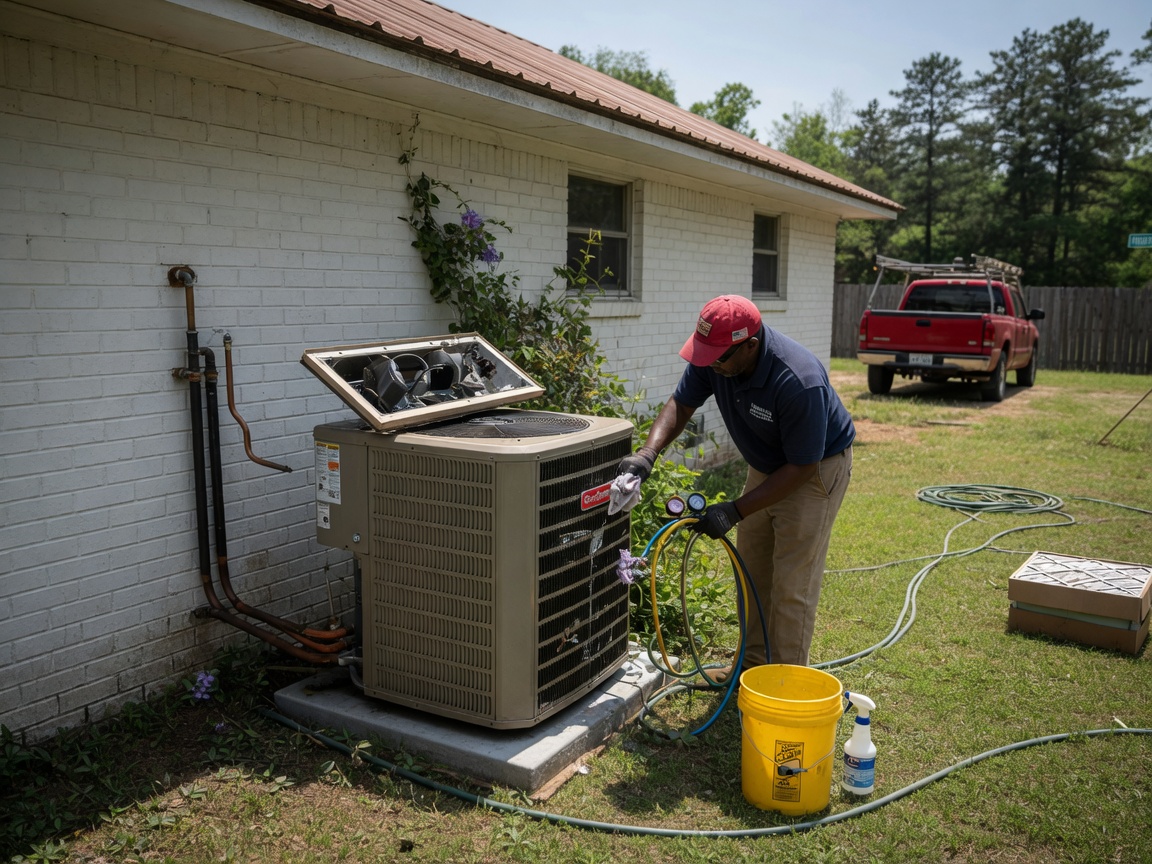
In Hempstead County, preparing your heat pump for summer starts with switching the system to cooling mode and clearing debris from the outdoor unit by early May, before daytime highs climb into the 90s and humidity spikes. Washington homes, including those near Old Washington Historic State Park, often feature older construction that traps moisture and forces units to work harder once mild winters give way to extended hot spells. Checking the thermostat settings and confirming the reversing valve operates correctly prevents short cycling when temperatures rise quickly after spring rains.
Switching to Cooling Mode
Begin by adjusting the thermostat from heat to cool and setting it 5–8 degrees below typical indoor targets to test the transition. In Washington and surrounding Hempstead County neighborhoods, heat pumps must reverse refrigerant flow smoothly because the same equipment handled mild winter heating loads just weeks earlier. Run the system for 15–20 minutes while listening for unusual noises from the compressor or fan, and verify that supply vents deliver air 15–20 degrees cooler than room temperature. Homes built before 1980 around the historic park frequently have single-pane windows and minimal attic insulation, so early mode changes let the unit stabilize before peak demand. If the reversing valve sticks or the thermostat fails to call for cooling, note the symptoms and schedule service rather than forcing repeated cycles that shorten equipment life.
Cleaning Coils and Outdoor Unit
Remove leaves, grass clippings, and pollen from the condenser coils using a soft brush and low-pressure water once spring growth accelerates in Hempstead County. Washington yards near the park often shed more debris during early storms, and buildup reduces airflow exactly when outdoor temperatures push the unit toward its design limits. Straighten bent fins with a fin comb to restore full surface area, and confirm the fan motor spins freely without wobble. Perform this cleaning on a mild day before humidity climbs above 70 percent, because wet coils combined with heavy pollen create mold films that impair heat transfer. Repeat the process monthly through September to maintain rated efficiency in the county's long cooling season.
Managing Humidity Loads
Hempstead County's humid subtropical conditions add latent load that forces heat pumps to dehumidify while cooling, especially in older Washington homes with unsealed crawl spaces. Excess moisture raises indoor relative humidity above 60 percent and makes the system run longer to reach thermostat setpoints. Check the condensate drain line for clogs and pour a cup of vinegar solution through it every 60 days to prevent backups that can shut the unit down during peak heat. Improve airflow across the evaporator coil by replacing 1-inch filters every 30–45 days rather than the standard 90-day interval. For deeper insight into how Arkansas humidity increases runtime, review the related article on local moisture effects.
Scheduling Maintenance Before Peak Season
Arrange a professional inspection through Clay Burn HVAC, based in Springdale and serving Washington, during business hours Monday through Friday 8am–6pm or Saturday 9am–2pm. A technician will measure refrigerant charge, test capacitor values, and confirm the heat pump's SEER rating still matches expected output under Hempstead County loads. In multi-story homes common near Hope and Nashville, uneven cooling often traces to duct leakage that only shows up once the system switches to continuous summer operation. Technicians can also evaluate whether a heat pump repair or full hvac maintenance visit will restore performance without waiting for a breakdown during a July heat wave.