
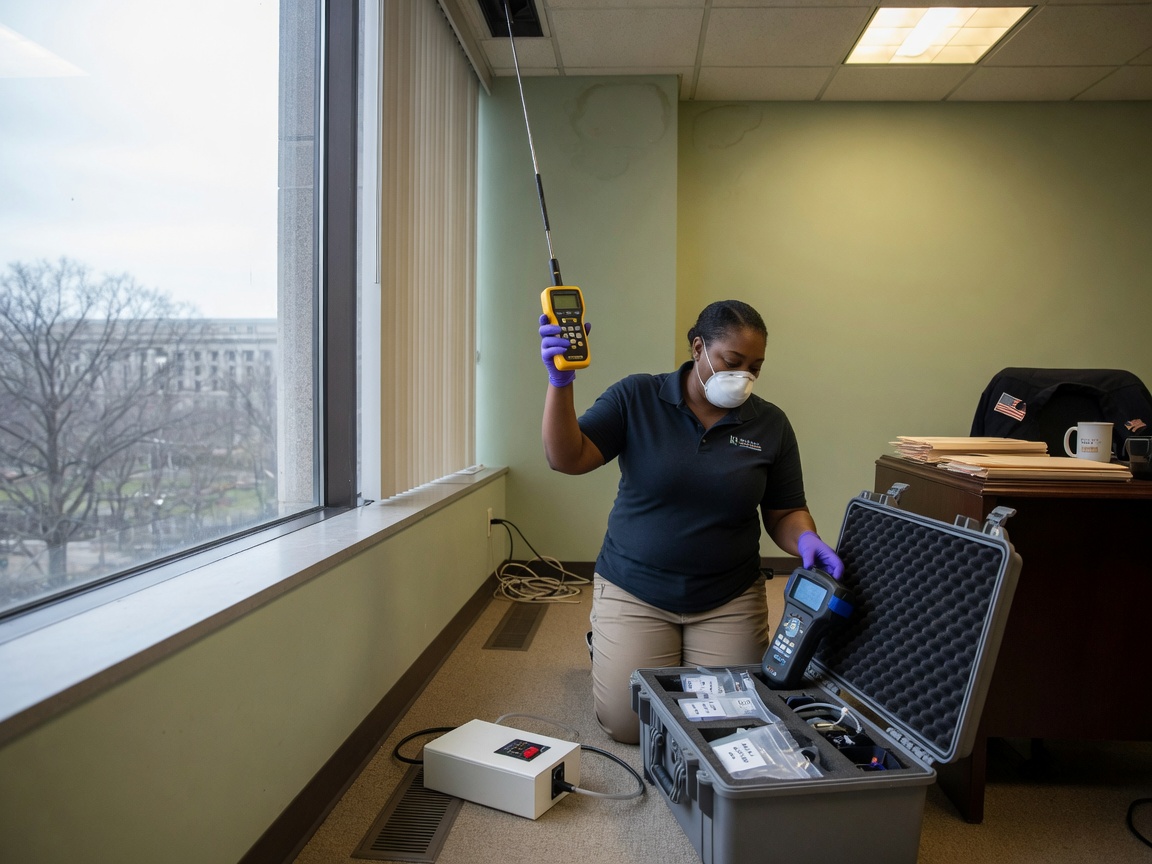
Fayetteville's older housing stock around the University of Arkansas campus and Wilson Park often shows elevated mold spores when humidity spikes during long hot summers. Mild winters let pollen from Mount Sequoyah drift through unsealed windows in homes along US-71 and AR-112. Clay Burn HVAC crews based in nearby Springdale frequently find VOC accumulation in compact rentals where student traffic and campus events keep windows closed for weeks.
Indoor Air Quality Testing in Fayetteville — What We Handle
- ✓University-area homes require testing around event schedules at Walton Arts Center and the Fayetteville Public Library.
- ✓I-49 corridor subdivisions need extra focus on moisture intrusion from rapid temperature swings in the local climate.
- ✓Work in Washington County neighborhoods differs by emphasizing crawl-space assessments tied to the area's wooded terrain.
Indoor Air Quality Testing Services We Offer in Fayetteville
✓Mold Spore Testing
Air and surface sampling to identify mold types common in Washington’s humid summers, with counts compared against outdoor baselines near the historic park.
✓Allergen and Dust Mite Screening
Collection of settled dust samples from carpets and upholstery to measure allergen levels elevated by mild winters and limited whole-house filtration in older homes.
✓Humidity and Moisture Mapping
Placement of data loggers throughout the home to track relative humidity spikes that occur during Hempstead County’s extended summer rains.
✓Carbon Monoxide and Gas Detection
Combustion-gas checks on appliances and flues, critical for homes with original chimneys found around Old Washington Historic State Park.
✓VOC and Chemical Pollutant Testing
Measurement of volatile organic compounds from building materials and stored items that linger in tightly closed homes during winter months.
Washington homes in Hempstead County often sit in a humid subtropical climate that drives moisture into crawl spaces and attics during long hot summers. Older houses near Old Washington Historic State Park frequently have original plaster, single-pane windows, and minimal duct sealing, allowing mold spores and volatile organic compounds to accumulate. Proper testing requires spore traps, moisture meters, and particle counters placed in multiple zones rather than a single central reading, because temperature swings between the park area and surrounding farmland create microclimates inside the same structure.
Mild winters still bring enough temperature differential for condensation on uninsulated ductwork routed through attics, especially in homes built before modern vapor-barrier standards. Technicians must account for pollen from surrounding pastures and occasional agricultural chemical drift from fields between Washington and Hope. Edge cases include false negatives on quick swab tests when residents have recently run window units; full air sampling over several hours reveals the actual load that affects respiratory health.
How It Works in Fayetteville
- 1
Initial Walk-Through
Technician inspects home layout, HVAC system, and known moisture areas while noting construction age and proximity to the historic park.
- 2
Equipment Placement
Spore traps, moisture meters, and particle counters are positioned in living areas, bedrooms, and attic based on airflow patterns.
- 3
Sample Collection And Logging
Air and surface samples are gathered over a minimum two-hour period, with outdoor control samples taken for comparison.
- 4
Report And Recommendations
Detailed findings with room-specific readings and prioritized remediation steps are delivered within 48 hours.
Serving All of Fayetteville
We regularly handle indoor air quality testing jobs near:
- 📍University of Arkansas campus
- 📍Walton Arts Center
- 📍Fayetteville Public Library
- 📍Mount Sequoyah
- 📍Wilson Park
Indoor Air Quality Testing Pricing in Fayetteville
Cost depends on number of test zones and whether lab analysis is required.
Want the full picture of this service? See our Indoor Air Quality Testing page, or everything we do in Fayetteville, AR.