
2026-10-29 · Clay Burn
Best Thermostat Settings For Arkansas Spring Weather
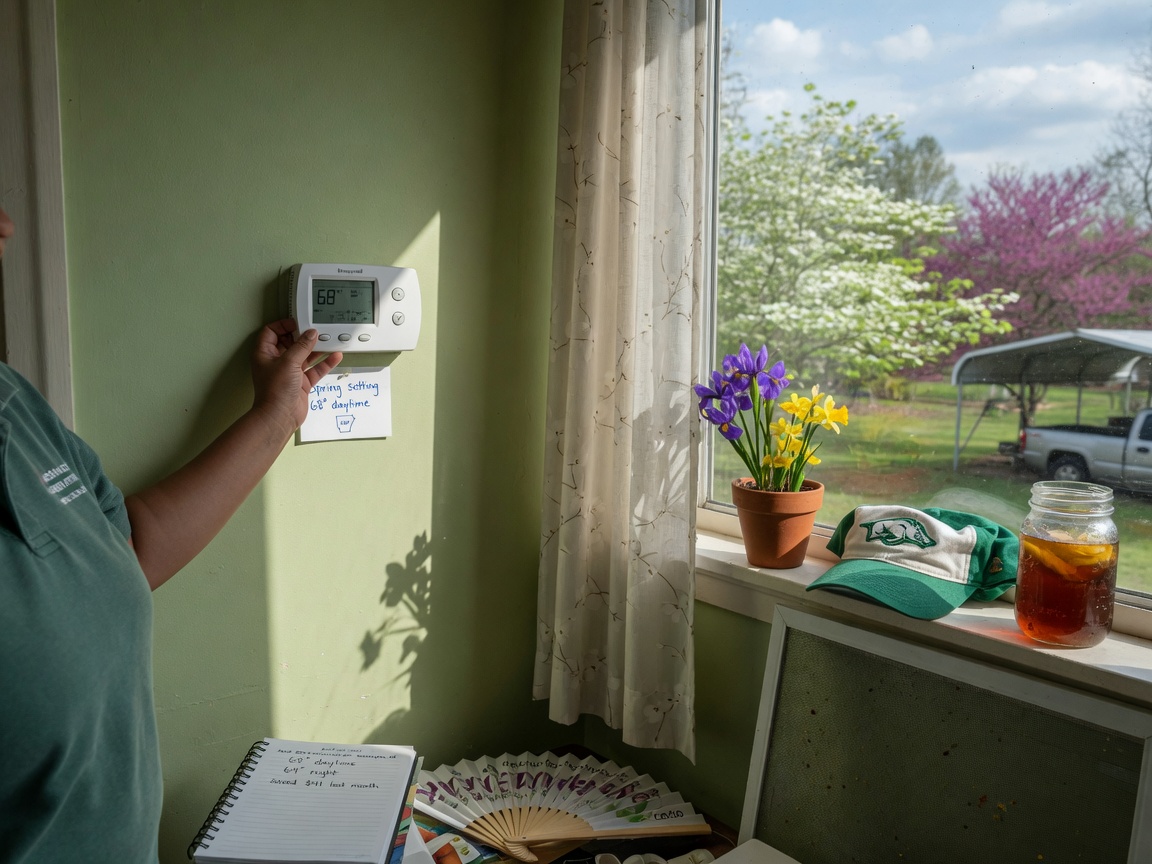
In Washington and nearby parts of Hempstead County, set your thermostat to 72°F during occupied daytime hours and 78°F when the home is empty to match the mild spring temperatures and rising humidity levels typical of the humid subtropical climate.
Understanding Local Spring Conditions
Washington sits in a humid subtropical zone where spring days often swing between cool mornings near 50°F and afternoons reaching 75°F. Homes around Old Washington Historic State Park frequently feature older construction with single-pane windows and minimal attic insulation, so indoor temperatures climb faster once humidity builds. These patterns mean a fixed 72°F daytime target prevents overcooling early in the day while still handling afternoon moisture. Residents in surrounding rural stretches of Hempstead County notice similar swings because open fields allow rapid warming once the sun rises. Adjusting for these daily shifts keeps equipment from short-cycling and reduces strain on systems serving nearby Hope and Nashville households.
Recommended Daytime Thermostat Settings
Hold the thermostat at 72°F when family members are active in the house. This setting counters the humidity that arrives with warming air without dropping indoor temperatures into the uncomfortable range. In multi-story homes common along county roads, place the sensor on the main living level to avoid overcooling upper floors that trap heat. If the house sits empty during work hours, raise the target to 78°F; the mild outdoor conditions allow the structure to coast without rapid rebound. Older Washington properties with thicker brick walls retain cool air longer, so a slightly higher away setting still delivers comfort upon return. These ranges align with the county's typical spring humidity loads and prevent the coil from running continuously.
Nighttime and Away Adjustments
Drop the setting to 70°F only after sunset when outdoor humidity begins to fall. Most Hempstead County homes benefit from this two-degree dip because cooler nights reduce the load on the system. Program the thermostat to return to 72°F thirty minutes before typical wake-up times so the house reaches comfort without an extended run cycle. When traveling to nearby Nashville or Hope for the day, leave the away setting at 78°F; the mild spring evenings prevent the interior from overheating. Programmable models installed through thermostat installation allow precise scheduling that matches local sunrise patterns and avoids unnecessary runtime during shoulder hours.
Managing Humidity Alongside Temperature
Spring humidity in Washington often exceeds 70 percent even when air temperatures remain moderate. Running the system at 72°F with a 5–7°F temperature swing allows the coil enough runtime to pull moisture without overcooling the space. Homes near the historic park frequently show higher indoor humidity because mature trees limit airflow around foundations. If moisture lingers, lower the target two degrees for an hour in the afternoon rather than all day. Pairing these adjustments with regular HVAC maintenance keeps drain lines clear and prevents musty odors common in older county residences. The same approach helps multi-story homes avoid uneven moisture levels between floors.
Programming Tips for Consistent Performance
Create a weekday schedule that starts at 72°F at 6:30 a.m., rises to 78°F at 8:30 a.m., and returns to 72°F at 5:00 p.m. Weekend patterns can stay at 72°F longer because occupancy increases. Check the filter monthly during spring pollen peaks to maintain airflow across the coil. Older Washington homes with original ductwork benefit from verifying supply vents remain open on both levels to prevent pressure imbalances. For properties experiencing uneven cooling, review guidance on troubleshooting uneven cooling in multi-story homes. These steps keep the system responsive to the county's quick spring weather changes while protecting equipment longevity.