2026-08-31 · Marcus Clayburn
Dealing With Pollen And Dust In Southwest Arkansas HVAC Systems
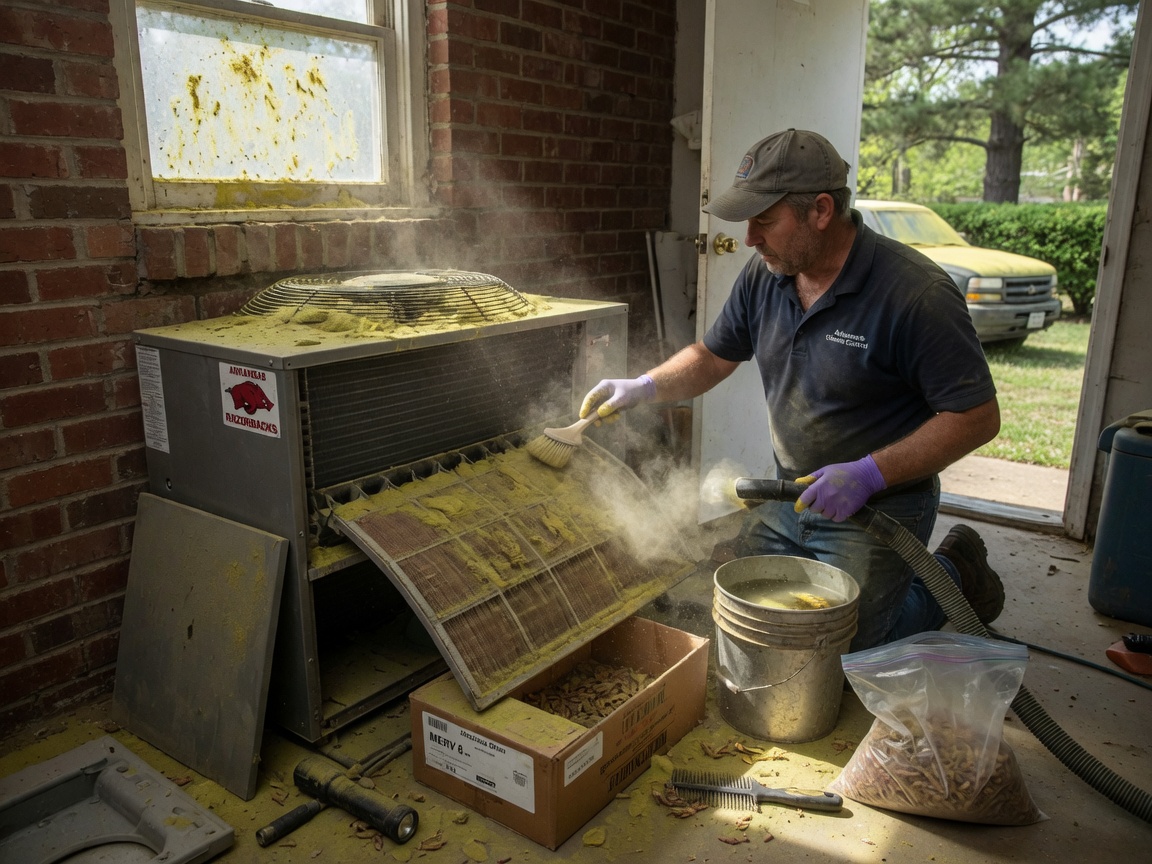
In Washington and surrounding Hempstead County neighborhoods, replacing HVAC filters every 30 days during peak pollen months from March through May cuts dust and allergen accumulation inside the system by roughly half compared with quarterly changes. The humid subtropical climate here drives rapid buildup on coils and in ducts, especially in older single-story homes common around the historic park and along routes toward Hope and Nashville. Homeowners who combine frequent filter swaps with annual professional attention see steadier airflow and fewer hot spots in summer.
Local Pollen Sources and HVAC Impact
Southwest Arkansas pollen peaks come from pine, oak, and ragweed that blanket yards and fields around Washington. These particles enter return vents on breezy days and travel through ductwork that often runs through unconditioned attics or crawl spaces typical of county homes built before 1990. Once inside, the moisture from humid summers makes pollen stick to evaporator coils, reducing heat transfer and forcing the compressor to run longer cycles. Mild winters keep systems running intermittently, allowing fine dust to settle rather than being flushed out. Residents near Nashville or Hope report similar patterns, with visible yellow film appearing on registers within two weeks of high pollen counts.
Filter Choices That Match Regional Conditions
Standard 1-inch fiberglass filters capture only the largest particles and clog quickly under local loads. Upgrading to 4- or 5-inch pleated filters rated MERV 8 to 11 fits most Washington homes without restricting airflow when the blower is properly sized. Change these on a 30-day schedule from late February through June, then stretch to 60 days in drier fall months. Mark the calendar for the first day of each month and keep spares on hand at the 17857 E Hwy 412 location during business hours. Never exceed the filter's stated life in this climate, because humidity causes captured pollen to swell and block passages faster than in northern Arkansas counties.
When Duct Cleaning Becomes Necessary
Visible dust on supply registers or a musty smell when the system starts indicates pollen and debris have built up inside the ducts. Professional cleaning with negative-air equipment removes the layer that household filters cannot reach, restoring full airflow in systems serving 1,800- to 2,400-square-foot homes common here. Schedule the work in early spring before pollen counts rise or after any major renovation that stirs drywall dust. One thorough cleaning typically lasts three to five years when paired with monthly filter changes and sealed return pathways.
Supporting Indoor Air Quality Steps
Whole-home humidifiers and dehumidifiers help control moisture that otherwise binds pollen to surfaces. A properly placed UV light on the coil kills mold spores that thrive in the county's 70-plus percent summer humidity. For homes with pets or multiple occupants, adding a dedicated return-air filter grille in high-traffic rooms reduces the load on the main system. These measures work together rather than in isolation, addressing both the source of particles and the conditions that let them accumulate. Air duct cleaning paired with indoor air quality testing gives a clear baseline before and after improvements.
Seasonal Schedule for Washington Homeowners
Begin spring filter changes on March 1 and continue through May. Inspect coils for pollen film in June before the hottest stretch arrives. Perform any needed duct cleaning in February or October when outdoor pollen is lowest. Check condensate drains monthly during summer to prevent overflow that can reintroduce captured dust into living spaces. This rhythm matches the actual weather patterns of Hempstead County rather than generic national advice. Signs your HVAC system needs professional inspection before summer outlines additional checks that align with these dates.
Sticking to this routine keeps pollen and dust from shortening equipment life in Washington homes while maintaining steady comfort through the county's distinct seasons.