
2026-10-29 · Clay Burn
How To Clear Debris From Outdoor AC Units After Storms
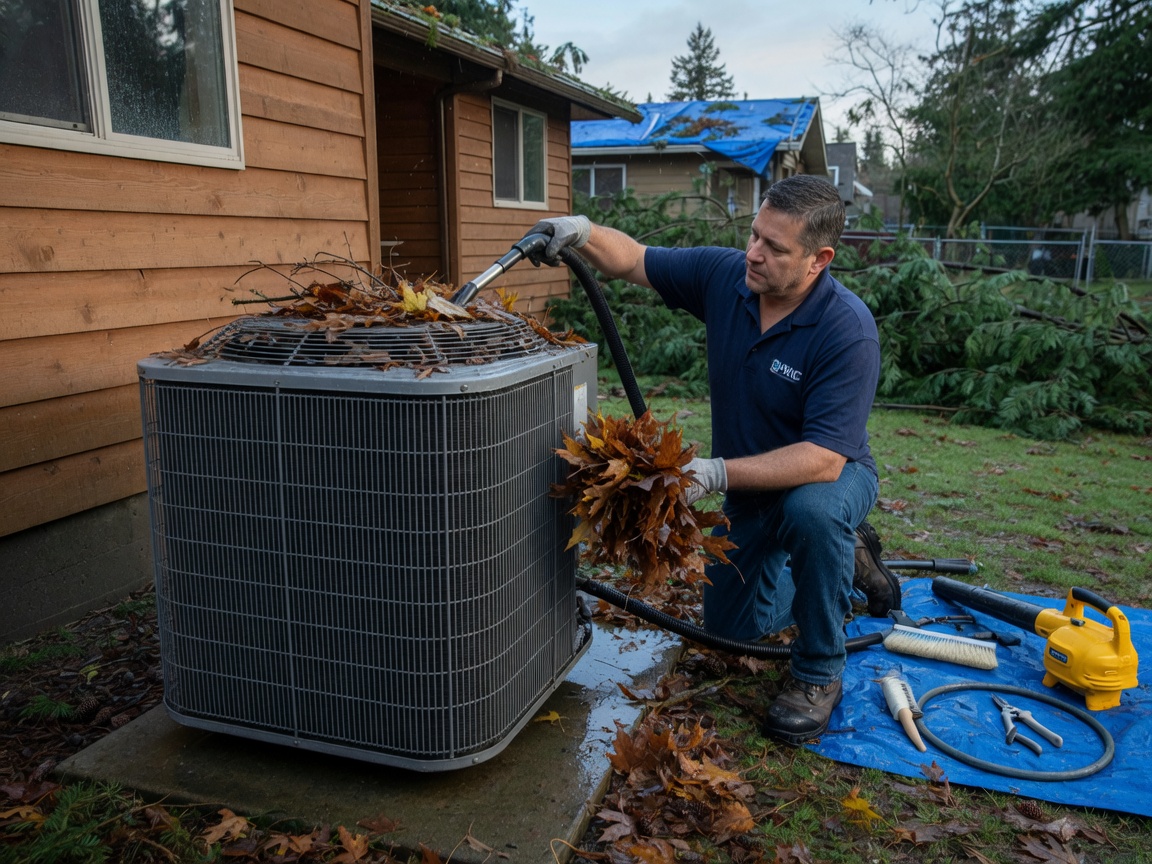
After storms pass through Washington in Hempstead County, turn off power at the breaker, remove visible large debris by hand, and rinse coils gently with a garden hose on low pressure to restore airflow quickly and safely.
Safety First Before Any Cleaning
Power must be shut off at the main breaker before touching the outdoor unit to avoid electrical hazards from wet conditions common in the humid subtropical climate. Inspect the area around the unit for downed limbs or standing water that could hide wiring issues. In neighborhoods near Old Washington Historic State Park, older homes often have units placed close to trees, increasing the chance of hidden damage after high winds. Wear gloves and eye protection when handling wet leaves or mud that accumulate on the base. Never use metal tools near the fan or electrical components, as they can bend fins or create shorts. Checking the disconnect box outside the unit confirms power is isolated before proceeding with debris removal.
Removing Large Debris from the Unit
Large branches and leaves collect against the fan guard and top grille after storms roll through Washington and nearby Hope. Start by lifting away loose items with gloved hands rather than pulling on the fan blades. Work around the perimeter first, then clear the top to prevent debris from falling back into the coils during later steps. In Hempstead County, heavy rains often pack mud and small sticks into the base, so scoop these out carefully with a plastic tool to avoid scratching the cabinet. Avoid forcing anything through the fins, which can restrict airflow long after the storm passes. Once the bulk is gone, a leaf blower on low setting directed away from the house can finish the job without pushing particles deeper into the system.
Cleaning Coils and Fins After Storms
With large debris cleared, spray the coils from the inside out using a garden hose on a gentle mist setting to wash away remaining grit without bending aluminum fins. Straighten any bent fins with a fin comb after the unit dries to maintain proper heat exchange in the hot summer months typical of the region. The humid subtropical climate around Nashville and Washington leaves behind sticky residue that attracts more dust, so a soft brush helps loosen buildup on vertical coils without damaging the surface. Rinse thoroughly but avoid high pressure that drives water into electrical compartments. Allow the unit to air dry completely before restoring power at the breaker. This process prevents reduced efficiency that shows up quickly when temperatures climb again.
Checking for Hidden Damage
After cleaning, examine the fan motor and wiring for moisture or debris that storms may have driven inside the cabinet. Listen for unusual noises on restart, such as grinding that signals debris caught in the blades. In Washington, units serving older homes near the historic park often show corrosion faster due to repeated wetting from summer storms. Look at the concrete pad for settling that could tilt the unit and strain lines. If the compressor runs but cooling feels weak, note the date and symptoms for later reference. These checks catch small issues before they lead to larger failures during peak heat.
When Professional Help Is Needed
Call a technician if debris has bent multiple fins, water sits inside the electrical panel, or the unit fails to cool after basic cleaning. HVAC Maintenance restores full performance when storm damage affects refrigerant lines or the fan motor. Technicians familiar with Hempstead County conditions can also spot early compressor stress that humidity accelerates. How To Spot Early Signs Of HVAC Compressor Failure outlines symptoms worth watching after heavy weather. For homes in Washington and surrounding areas, prompt service prevents extended downtime during the next heat wave.
Preventing Future Storm Issues
Schedule regular inspections before storm season to secure loose panels and clear vegetation around the unit. Why Arkansas Humidity Makes Your AC Work Harder explains why clean coils matter more in this climate. Keep shrubs trimmed at least two feet away and consider a protective mesh screen rated for outdoor use. These steps reduce the volume of debris that reaches the coils during high winds common in Hempstead County. Clay Burn HVAC, based in Springdale, serves Washington with reliable response when storms hit.