2026-08-31 · Marcus Clayburn
How To Spot Early Signs Of HVAC Compressor Failure
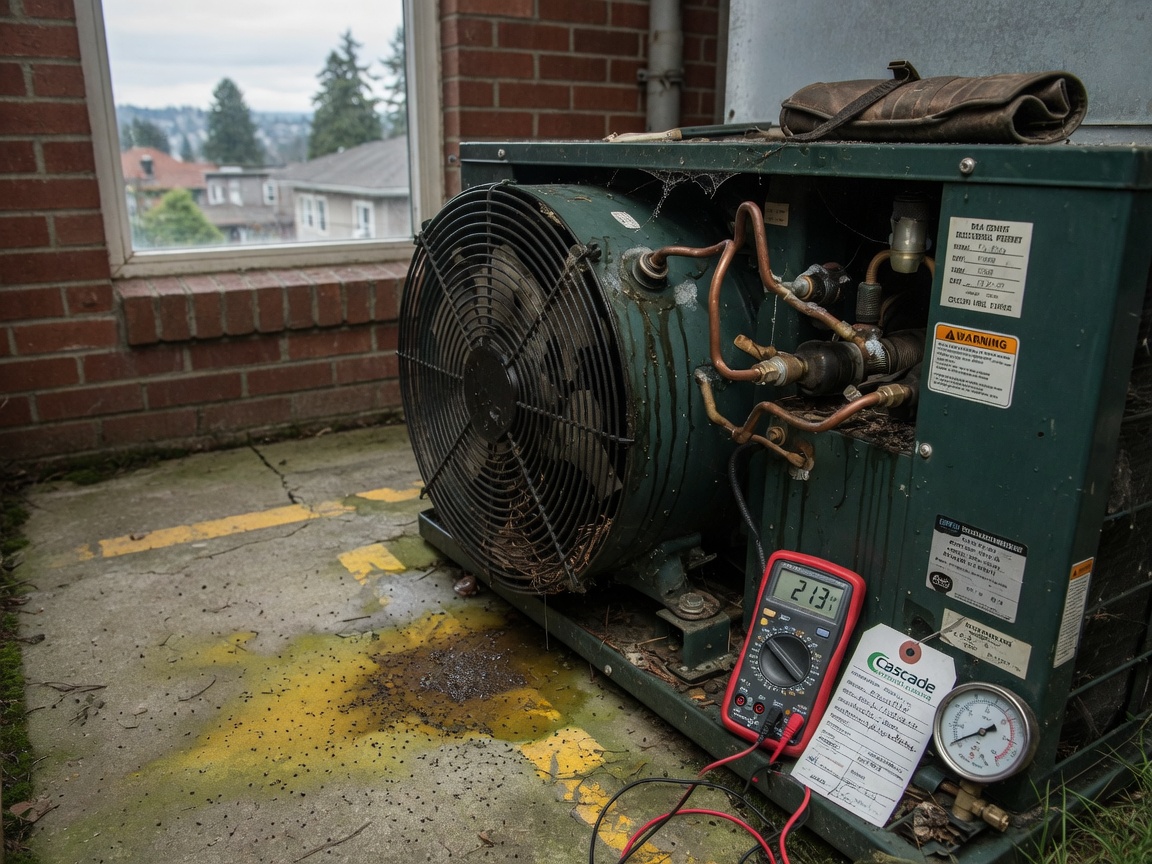
In Washington and surrounding Hempstead County properties, the first reliable sign of HVAC compressor failure is a noticeable drop in cooling output even when the thermostat is set correctly and filters are clean, often appearing 2–4 weeks before complete shutdown during peak summer heat.
Unusual Sounds During Operation
Homeowners near Old Washington Historic State Park frequently report a grinding or rattling noise from the outdoor unit that starts intermittently and worsens over several days. These sounds usually come from internal mechanical wear inside the compressor shell and become more pronounced when humidity levels stay above 70 percent for consecutive days. In older single-story homes common along Highway 4, the unit sits closer to ground level, so vibrations transmit directly into living spaces and make the issue easier to notice early. Checking the unit once a week during July and August helps catch this before the compressor seizes and requires full replacement.
Weak Airflow and Longer Run Times
When the compressor begins to lose compression, indoor supply vents deliver air that feels only slightly cooler than room temperature even after the system has run for 20 minutes. This forces the unit to operate 30–50 percent longer each cycle, which is especially noticeable in the mild winters when residents switch to heat pump mode and expect quick temperature recovery. Properties in rural stretches between Washington and Hope often have ductwork that was installed 20–30 years ago, so any efficiency loss compounds quickly and shows up on utility statements within one billing cycle. Tracking run times with a simple timer for three consecutive days gives a clear baseline to compare against normal performance.
Rising Monthly Energy Costs
A failing compressor draws extra amperage to maintain the same cooling level, pushing electric bills up by $35–$75 per month in Hempstead County’s humid subtropical conditions where AC use stretches from May through September. Residents in Nashville and surrounding areas have shared similar patterns when their systems reach 8–12 years of age and the compressor starts short-cycling. Because many Washington homes still use the original duct layouts from earlier decades, the extra runtime also increases humidity inside the house, prompting the system to work even harder. Comparing this month’s kWh usage against the same period last year provides a concrete early warning without needing specialized tools.
Visible Refrigerant Line Issues
Frost or ice forming on the larger suction line near the outdoor unit during hot afternoons signals low refrigerant flow caused by compressor inefficiency. In Washington’s clay-heavy soils, minor settling around the pad can tilt the unit slightly and contribute to these line problems over time. Checking the lines once a month when temperatures exceed 90 degrees allows homeowners to spot the change before the system locks out on a high-pressure or low-pressure safety switch. Addressing the issue promptly through scheduled HVAC maintenance prevents a small leak from turning into a full compressor replacement that typically costs $1,800–$2,600 in this region.
Routine checks combined with professional inspection keep systems running through the long cooling season. Homeowners who notice any of these signs should contact Clayburn HVACR INC. at 17857 E Hwy 412, Springdale, AR 72764 during Mon–Fri 8am–6pm or Sat 9am–2pm. For ongoing system care, schedule HVAC maintenance and review related guidance on common causes of frozen coils during Arkansas winters to stay ahead of compressor strain.