
2026-10-29 · Clay Burn
Understanding SEER Ratings For Homes In Hempstead County
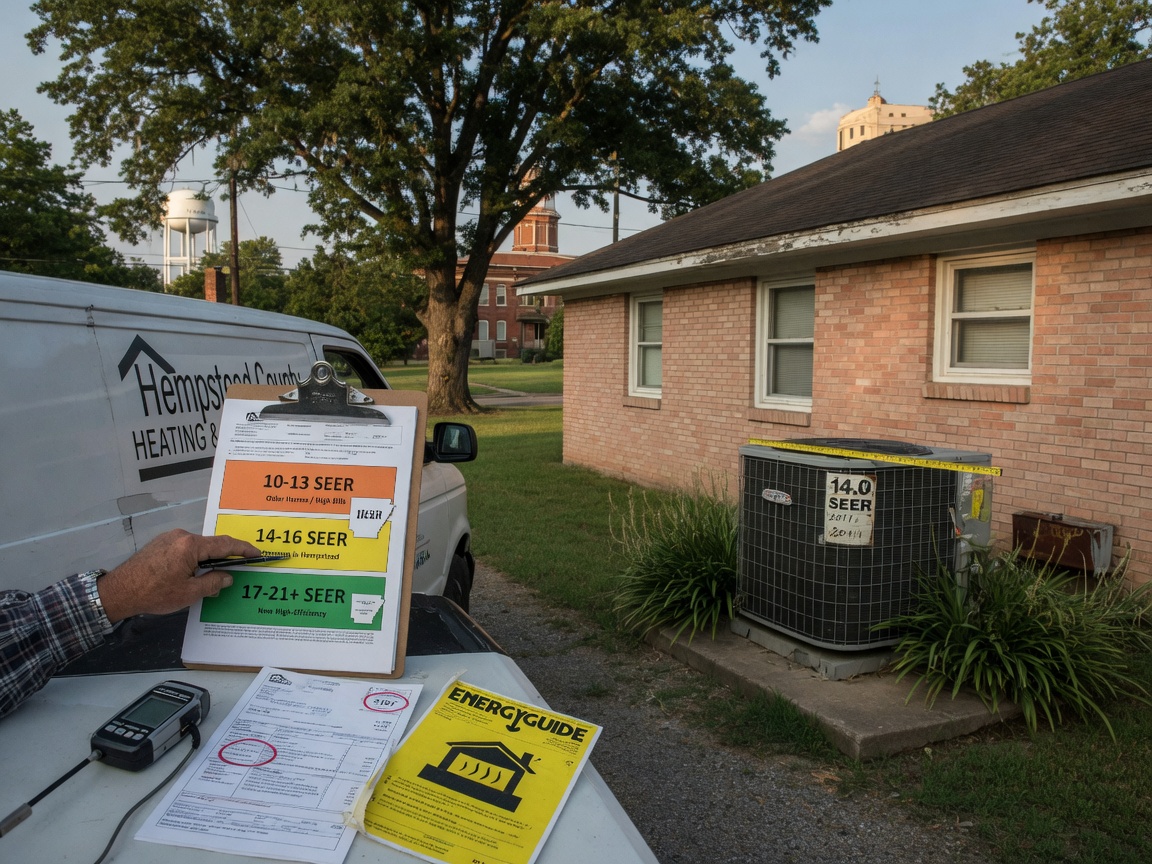
SEER ratings for HVAC systems in Hempstead County homes typically fall between 14 and 18 for balanced performance against hot summers and humidity. Higher ratings reduce electricity draw during peak cooling months when temperatures push past 90 degrees for weeks at a time.
What SEER Ratings Actually Measure
Seasonal Energy Efficiency Ratio tracks cooling output divided by electricity input over an entire season. A 16 SEER unit moves 16 BTUs of heat per watt-hour consumed, while a 13 SEER model moves only 13. In Hempstead County the difference shows up most clearly from June through September when humidity stays high and systems run longer cycles. Older homes near Old Washington Historic State Park often have single-pane windows and minimal attic insulation, so a higher SEER rating offsets those heat gains without oversized equipment. Technicians measure actual duct leakage and insulation levels before recommending a specific number because the rating only holds when the whole system matches the home's load.
How Local Climate Changes SEER Performance
Hempstead County's humid subtropical conditions create long cooling seasons with mild winters that rarely drop below freezing. This pattern means the SEER number matters more than the HSPF rating for most homeowners. Systems in Washington and nearby Hope face constant moisture removal demands that lower effective efficiency if coils are undersized or dirty. A 15 SEER heat pump installed in a Nashville-area farmhouse can lose two full points of performance when airflow is restricted by 30-year-old ductwork. Regular filter changes and coil cleaning preserve the published rating because dirt buildup forces the compressor to work harder against the same outdoor conditions.
Matching SEER to Homes Around Washington
Many residences in Washington and surrounding Hempstead County areas date to the early 1900s and feature balloon framing with limited wall insulation. These homes benefit from 16 or 17 SEER equipment paired with sealed ductwork rather than jumping straight to 20 SEER units that may short-cycle. Technicians calculate Manual J loads using local design temperatures of 95 degrees for cooling to avoid oversizing. In multi-story properties, zoning dampers and variable-speed blowers help maintain even temperatures without sacrificing the efficiency the SEER rating promises. Upgrading from a 10 SEER unit still in service can cut summer utility costs noticeably once the new equipment runs at the higher rating consistently.
Keeping Efficiency After Installation
A properly rated system loses ground without routine attention to filters, coils, and refrigerant charge. HVAC Maintenance visits twice a year catch issues before they drop real-world SEER performance. Homeowners also benefit from checking Best Thermostat Settings For Arkansas Spring Weather to avoid running equipment during mild shoulder seasons when humidity control still matters. In older Washington homes, adding attic insulation and sealing attic bypasses often delivers more efficiency gain than simply choosing a higher SEER number alone.
When Higher SEER Makes Sense
Homes with recent insulation upgrades or new windows around the Old Washington Historic State Park area can capture the full savings from 18 SEER equipment. Variable-speed compressors maintain the rated efficiency across a wider range of outdoor conditions common in Hempstead County. Pairing the new unit with Air Conditioning Installation that includes proper refrigerant line sizing and evacuation prevents early efficiency loss. Tracking monthly kWh use before and after replacement shows whether the higher upfront cost pays back within the equipment's expected service life.